Give the building cleanup a clear place in the recovery
Water in a restaurant can interrupt food preparation, refrigeration access, dishwashing, service, and deliveries at once. The source might be a supply connection, appliance, drain, roof, or adjoining occupancy. Identifying that source and keeping people away from unsafe conditions are the starting points for an organized response.
Water Damage Pros Fremont connects callers with independent restoration providers. Explain whether the affected area is a kitchen, dining room, restroom, storage room, or a combination. Mention suspected drain water or other contamination early. The provider can discuss its capabilities and how building cleanup may fit alongside equipment vendors and other required professionals.
Protect access and stop the source through the right trade
Keep staff and customers away from water near electrical equipment, damaged ceilings, and areas of uncertain contamination. Do not restart wet appliances or ask employees to work around an unresolved electrical concern. A qualified plumber, electrician, equipment technician, or roofer may need to address the source or make the affected system safe.
If the restaurant leases its space, involve the property manager when shared plumbing, structural components, or neighboring units are implicated. Identify the person authorized to approve emergency work. One clear point of contact helps the cleanup provider receive source-repair updates and request decisions without interrupting several people during service disruption.
Keep food and product decisions separate from floor cleanup
Water may reach packaged goods, preparation surfaces, shelves, or storage containers. Keep affected products identified and separated where this can be done safely under the business's procedures. Record the location and apparent exposure before items are moved when practical, without delaying necessary safety actions.
Food suitability, handling, disposal, and any conditions for resuming food service must be addressed through the responsible operator and appropriate food-safety authority or qualified specialist. A restoration contractor drying the building does not by itself establish that food, packaging, or a preparation surface is suitable for use.
Investigate the route behind counters and beneath equipment
Fixed counters, built-in cabinets, floor coverings, and equipment bases can conceal the path of water. The accessible dining-room puddle may be only one part of the damage. Ask the provider to explain which surrounding materials need assessment and whether access requires help from an equipment or installation vendor.
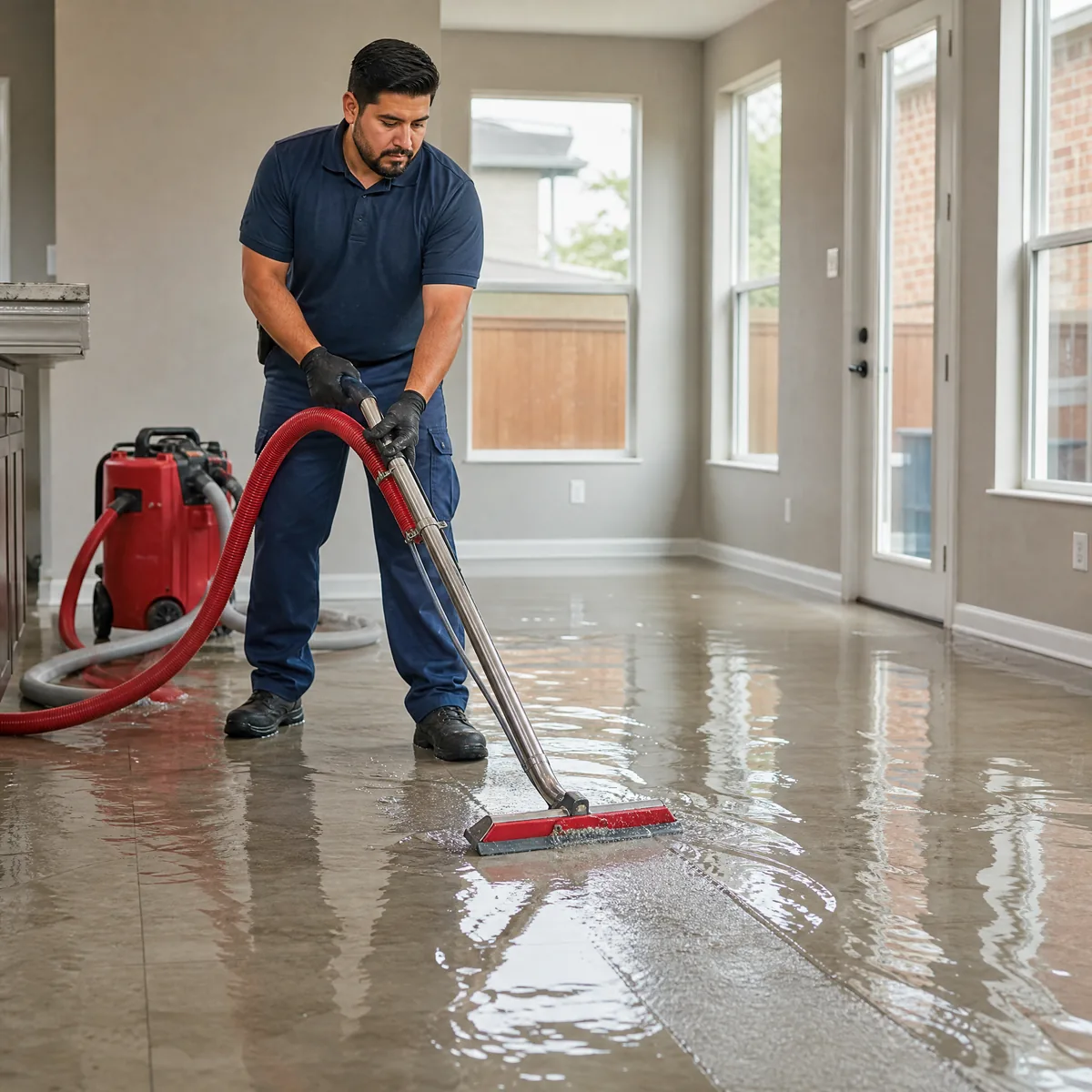
Do not disconnect gas, electrical, refrigeration, or other specialized equipment simply to create drying access. The appropriate trade should handle those systems. The restoration scope can then identify water extraction, cleaning, material removal, and drying around the building components it is authorized to address.
Respond appropriately to drain and sewage involvement
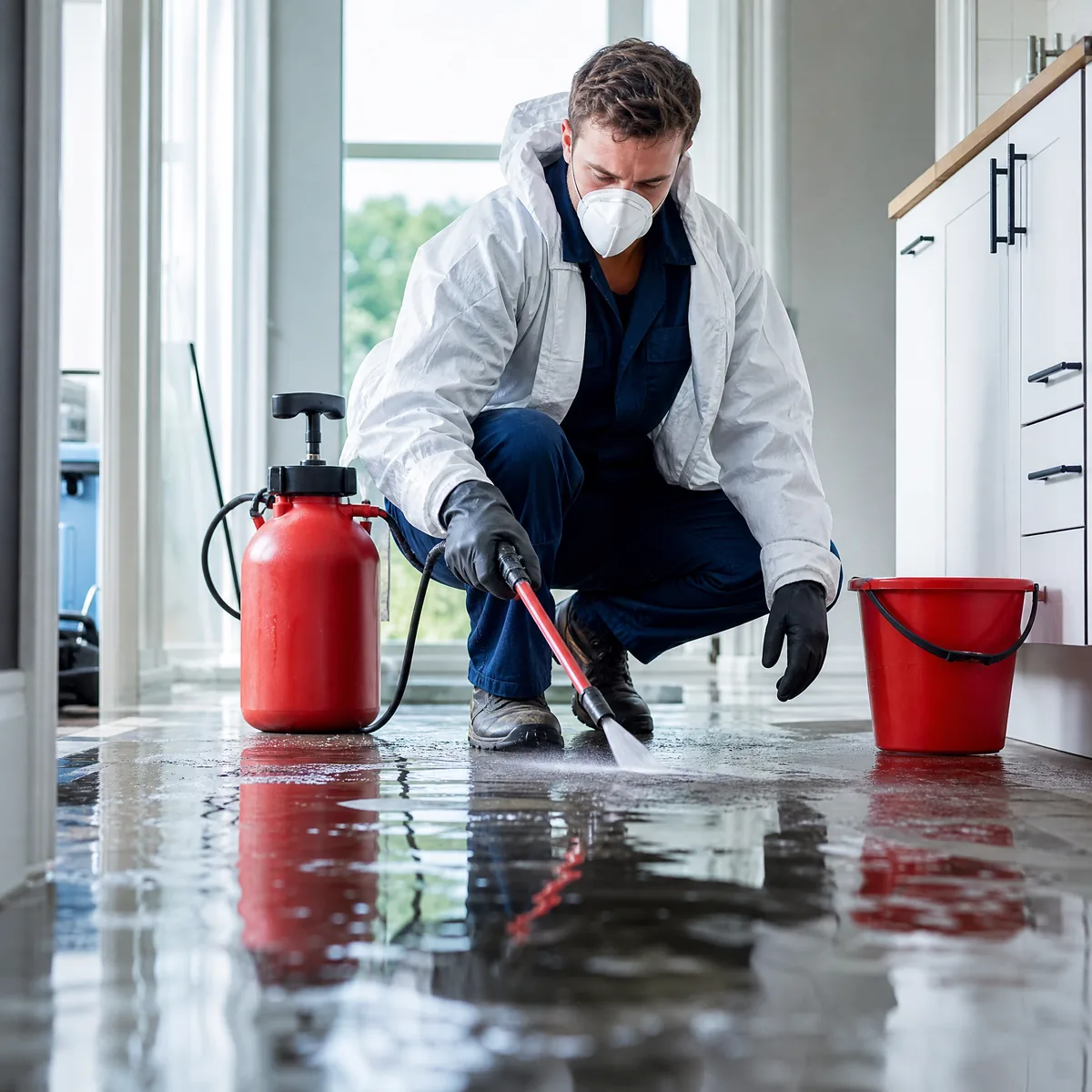
Water from a drain backup needs an assessment of contamination, affected materials, and movement through the premises. Avoid treating it as an ordinary mopping job. Keep people out of the affected area and explain whether water has crossed into storage, food preparation, or customer spaces.
The provider should describe the proposed containment or separation, cleaning, removal, and waste-handling approach for the actual conditions. Our sewage cleanup guide explains why the source matters. A plumber's correction of the blockage and the building's contamination cleanup are related tasks with different scopes.
Monitor the materials that remain wet after extraction
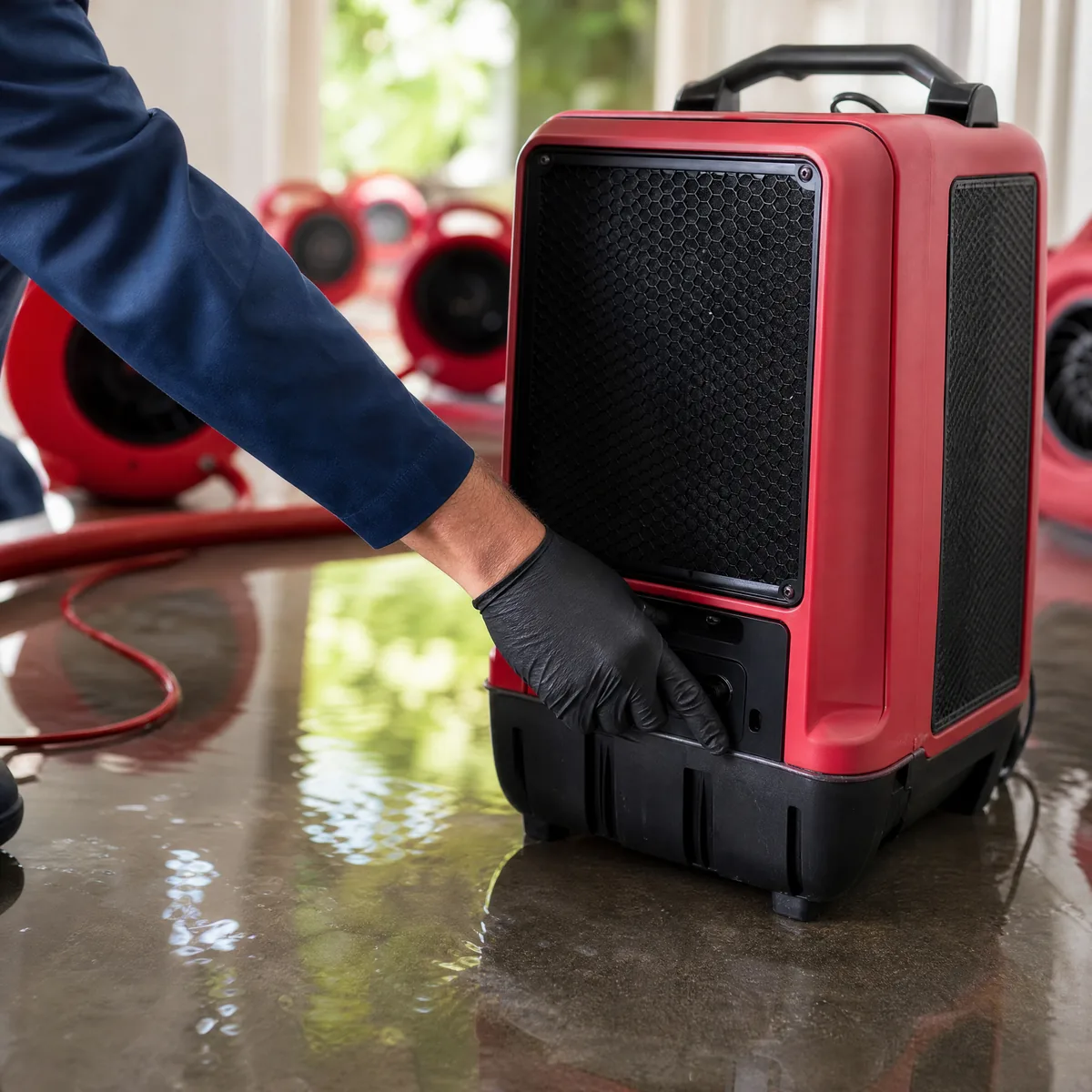
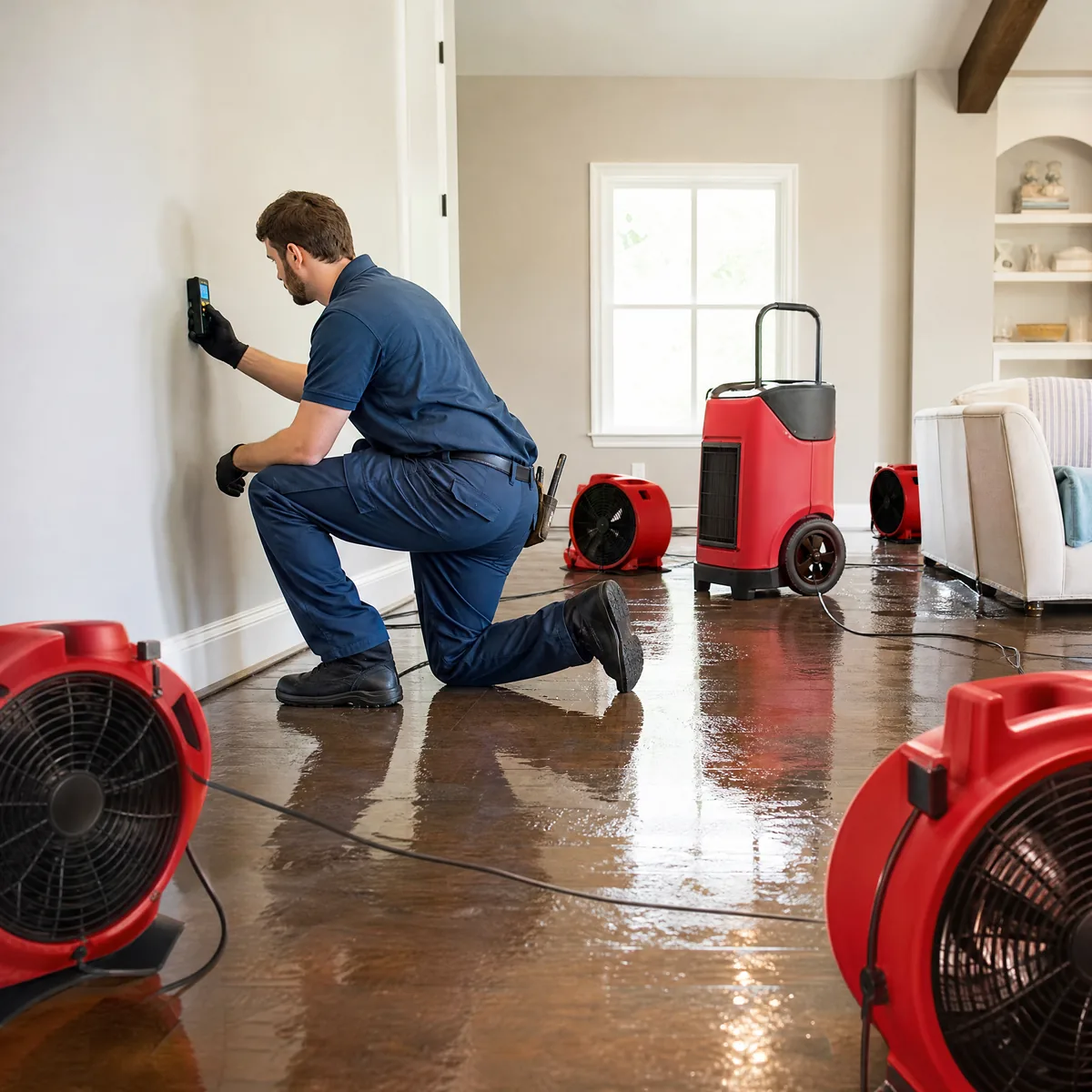
Visible water removal can leave moisture in wall bases, cabinets, subfloor layers, and other assemblies. Appropriate structural drying depends on the materials being retained, the extent of wetting, and the conditions in the work area. An operating kitchen or an open exterior door can also affect the drying environment.
Ask how progress will be measured and what access must remain available for inspections. Equipment noise, heat, cables, and airflow may affect adjacent activities. Do not move or switch off restoration equipment without discussing the effect on the plan with the provider responsible for the drying work.
Coordinate equipment checks and the return to operation
Refrigeration, dishwashers, point-of-sale devices, electrical systems, and other equipment may require evaluation by their qualified service vendors. The fact that the surrounding room has dried does not establish that a device is safe or working correctly. Keep a record of each affected system and the vendor responsible for the next decision.
Likewise, completing building mitigation does not replace any required food-safety review, repair, cleaning verification, or operating approval. Build a reopening plan around the actual remaining tasks. Confirm who communicates with the relevant authority, who signs off equipment work, and who decides when products can return to the space.
Prepare a focused request for help
When calling, give the Fremont address, entrance, kitchen or tenant contact, suspected source, and affected areas. Explain whether water is still entering and whether a plumber or equipment vendor is already responding. Mention shared loading access, operating-hour restrictions, and any requirements for contractors on the property.
Call (866) 552-5141 to discuss current independent provider availability and charges before arranging a visit. Request a written description of the initial cleanup scope and the tasks that remain outside it. The broader commercial restoration page explains how to organize access, documentation, and decisions across the recovery.