Turn an office leak into a defined recovery project
Water may begin in a break room or ceiling and affect workstations, meeting spaces, flooring, records, and equipment. Staff may discover the loss at the start of the day, while other people arrive unaware of which areas are safe to enter. A useful response establishes the affected rooms and a contact who can organize the work.
Water Damage Pros Fremont connects office managers and property owners with independent restoration providers. Describe the suite, source if known, and current restrictions. Explain whether staff are present and which building representative controls shared utilities or access to spaces above the office.
Keep people away from wet electrical equipment
Water around desks can involve power strips, outlets, computers, and network devices. Do not ask employees to disconnect equipment while standing on wet flooring. Restrict unstable ceiling areas and involve the appropriate qualified trade for electrical or structural concerns.
If staff move to another work area, keep that relocation separate from the cleanup route. Wet furniture or devices should not be carried into unaffected rooms without a plan. A clear message about restricted rooms helps avoid accidental entry by visitors or staff arriving after the initial incident.
Identify records and technology that require special handling
The restoration crew needs to know which cabinets, storage, devices, and files are restricted. Designate your authorized staff or vendors for confidential records and IT equipment. General building cleanup should not be assumed to include document recovery, data restoration, or permission to access sensitive materials.
Water-affected electronics need the appropriate professional evaluation before being powered again. For items moved off-site, keep an inventory and a custody contact. A practical contents plan allows the mitigation work to proceed without losing track of devices and records essential to the office's return.
Follow the water above the ceiling and under the floor
A stained tile or wet carpet marks an area to inspect, but may not show how the water traveled. Concealed insulation, framing, wall cavities, and floor layers can remain affected. If the source is in another suite or shared system, building management may need to arrange access.
Give the contractor observations about adjacent rooms and any earlier leak in the same area. Ask how the work boundary is being determined. Replacing visible finishes without evaluating the connected assembly can leave uncertainty about what remains wet behind the repaired surface.
Plan equipment around safe access and necessary work
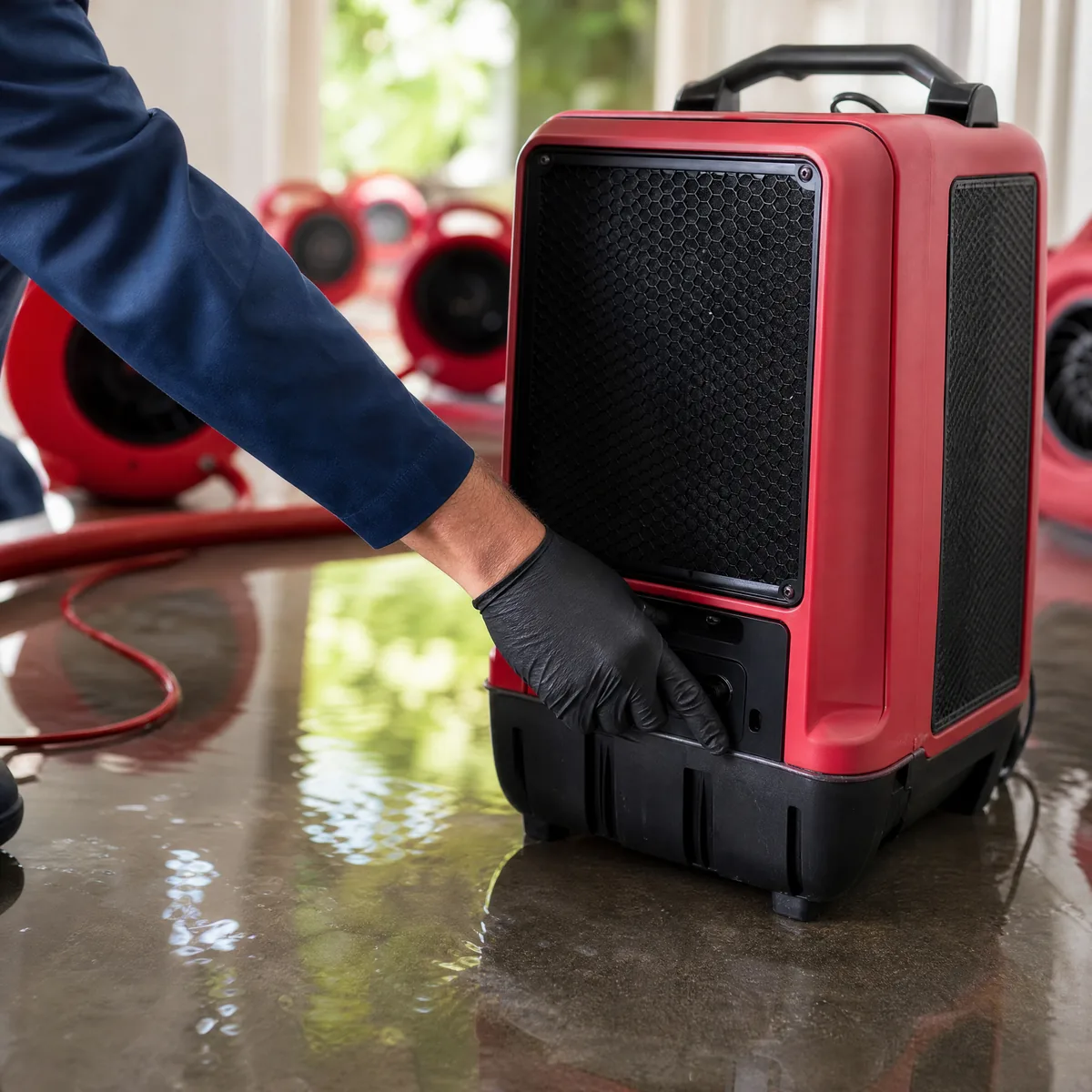
The contractor may extract water, remove unsuitable material, clean, and establish a drying setup. Discuss the placement of cables, hoses, and equipment, and the effect on exits, noise, comfort, and usable space. Work restrictions should be explained by room rather than as a vague statement that the office is partly open.
If the team works remotely during cleanup, arrange access for follow-up measurements. A drying plan may require equipment to remain operating after office hours. Coordinate any change instead of having an employee switch machines off or move them to reclaim a conference room without consulting the provider.
Separate the owner and tenant workstreams
The lease and other relevant agreements may distinguish shared systems, building finishes, tenant improvements, and contents. Identify who can authorize each scope. The restoration provider can document its work, but it does not determine all legal or payment responsibilities between the parties.
Coordinate the plumber, roofer, or building engineer handling the source with mitigation and reconstruction. Keep a schedule showing what must happen before ceilings or floor coverings are replaced. This helps avoid repairs being disrupted because an unresolved source or concealed area still requires access.
Keep records that are useful to the next contractor
Photographs, room lists, source findings, estimates, and drying information should identify which areas were affected and what changed during work. Request an explanation of additional removal or repairs when new damage is uncovered. Keep contents and equipment decisions distinguishable from the building work.
If insurance is involved, discuss the actual event and documentation requirements with the insurer. The restoration contractor's records can support an account of the physical loss, but they do not establish coverage for every device, improvement, or interruption to office activity.
Return the workspace with outstanding items accounted for
Before employees reoccupy an affected room, identify remaining repairs, equipment checks, and any access limitations. Confirm where records and furniture have been moved. A room that is dry may still have exposed finishes or untested equipment that affects its normal use.
Call (866) 552-5141 for office water-damage help in Fremont. The provider can discuss current availability and the initial assessment. For broader shared-building coordination, see commercial restoration; for the remaining moisture stage, see structural drying.