Take the equipment out of use safely
Do not continue operating a leaking appliance to find out whether the problem repeats. Avoid wet plugs, controls, and electrical connections. Moving a heavy appliance can also stress plumbing or create another hazard if the connections have not been made safe.
Ask the appropriate technician to diagnose the source and coordinate safe access. The restoration provider may need the appliance moved to inspect the wall or floor behind it, but disconnection and repair are not automatically within the cleanup contract. Clarify those tasks before the crew arrives expecting an accessible work area.
Dishwasher leaks can reach beneath cabinet runs
Water under a dishwasher may travel along cabinet bases and below adjoining flooring. The exposed cabinet face can look unaffected while hidden components remain wet. A floor inspection may need to consider the appliance recess, toe-kick area, neighboring cabinets, and the adjacent room.
Ask how access will be obtained and whether any component needs removal. Custom cabinetry, countertops, appliance reinstalling, and finish matching may require separate trades. Keep those dependencies visible in the scope so necessary inspection does not become confused with a full kitchen-remodeling decision.
Laundry leaks can involve supply or drain water
A washing machine may leak during filling, draining, or while sitting unused. Tell the technician which pattern you observed. The restoration provider also needs to understand the source because drain water and a recent supply-line leak can call for different material and cleaning decisions.
An upstairs laundry area may affect the ceiling below, while a garage or ground-floor installation may send water through adjoining doorways. Include those rooms in the description. The apparent size of the laundry space does not limit how far the loss could have spread through the building.
A refrigerator line may wet the floor gradually
Slow leakage behind a refrigerator can be discovered through lifted floor edges, staining, or damaged adjacent material rather than a large pool. The duration may be uncertain. Do not assume the newest visible mark shows when the problem began or establishes the entire work boundary.
The contractor can evaluate the accessible surfaces and decide where further inspection is appropriate. Share earlier signs or repairs in the same area. If visible growth or a prolonged damp condition is found, ask about the appropriate mold evaluation and cleanup scope rather than treating additional drying as the only possible need.
Assess the floor layers before promising preservation
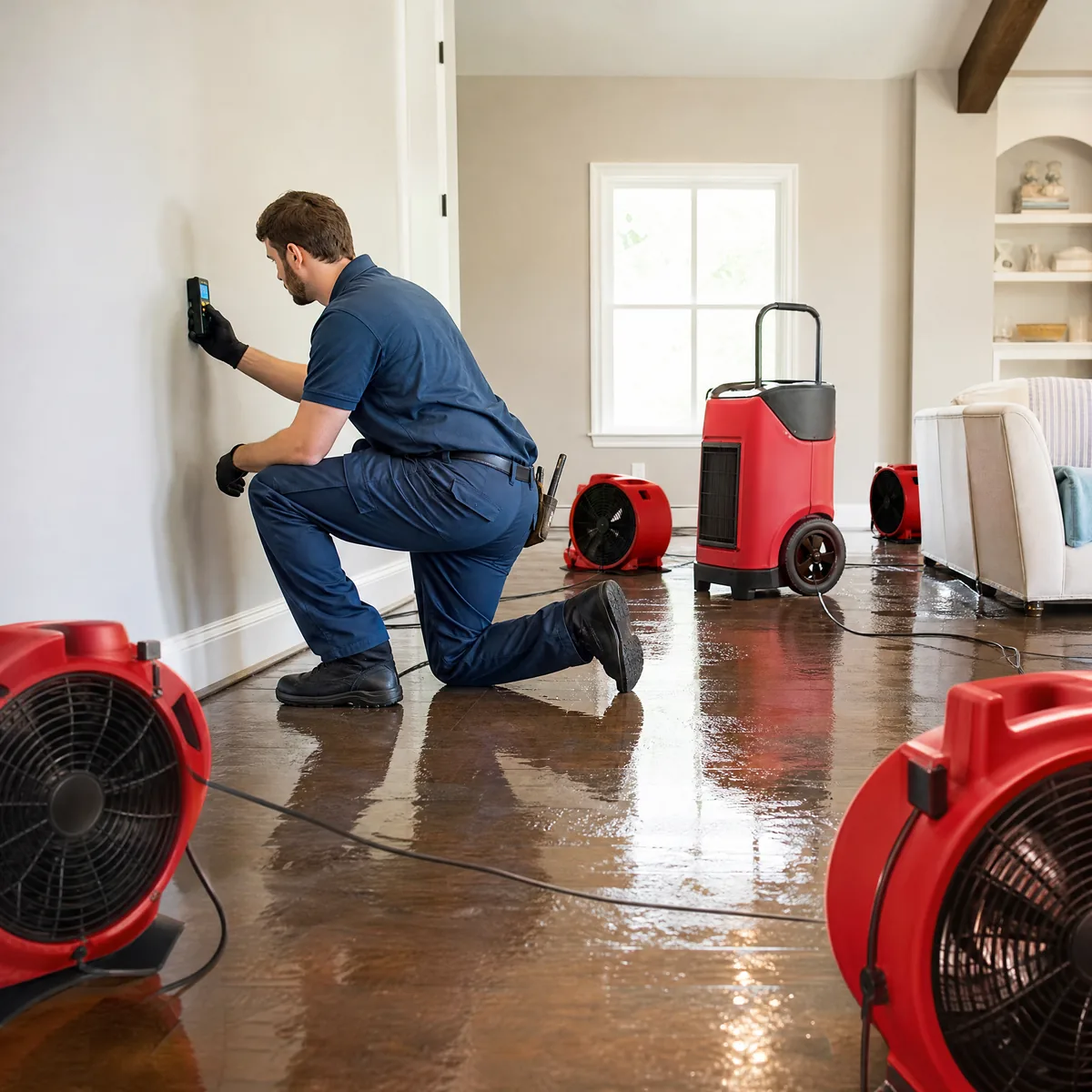
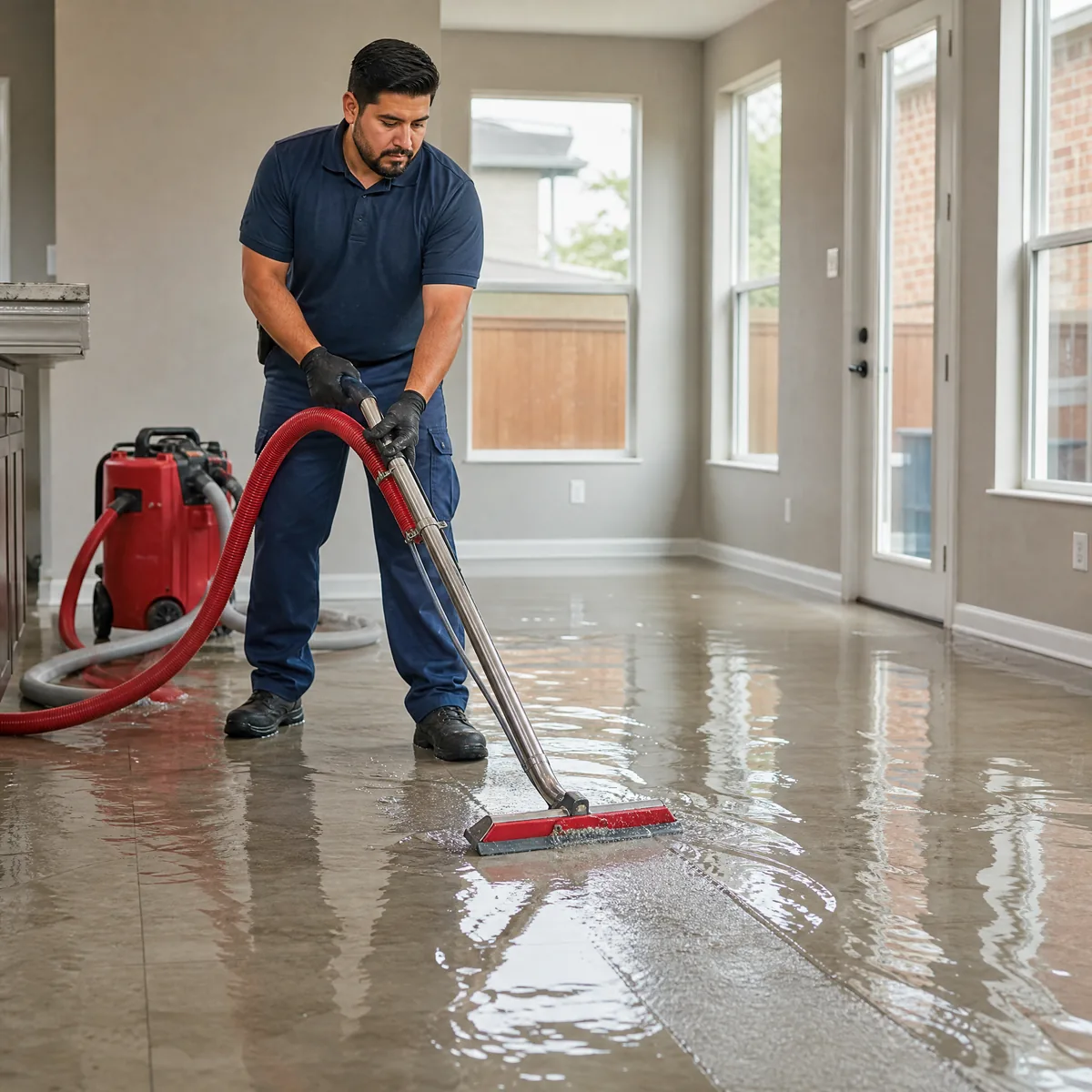
The water source, material condition, time wet, and construction affect whether flooring or cabinet components can reasonably be retained. Extraction deals with accessible water. Drying must address remaining moisture where it actually sits, including below or behind the visible finish when suitable.
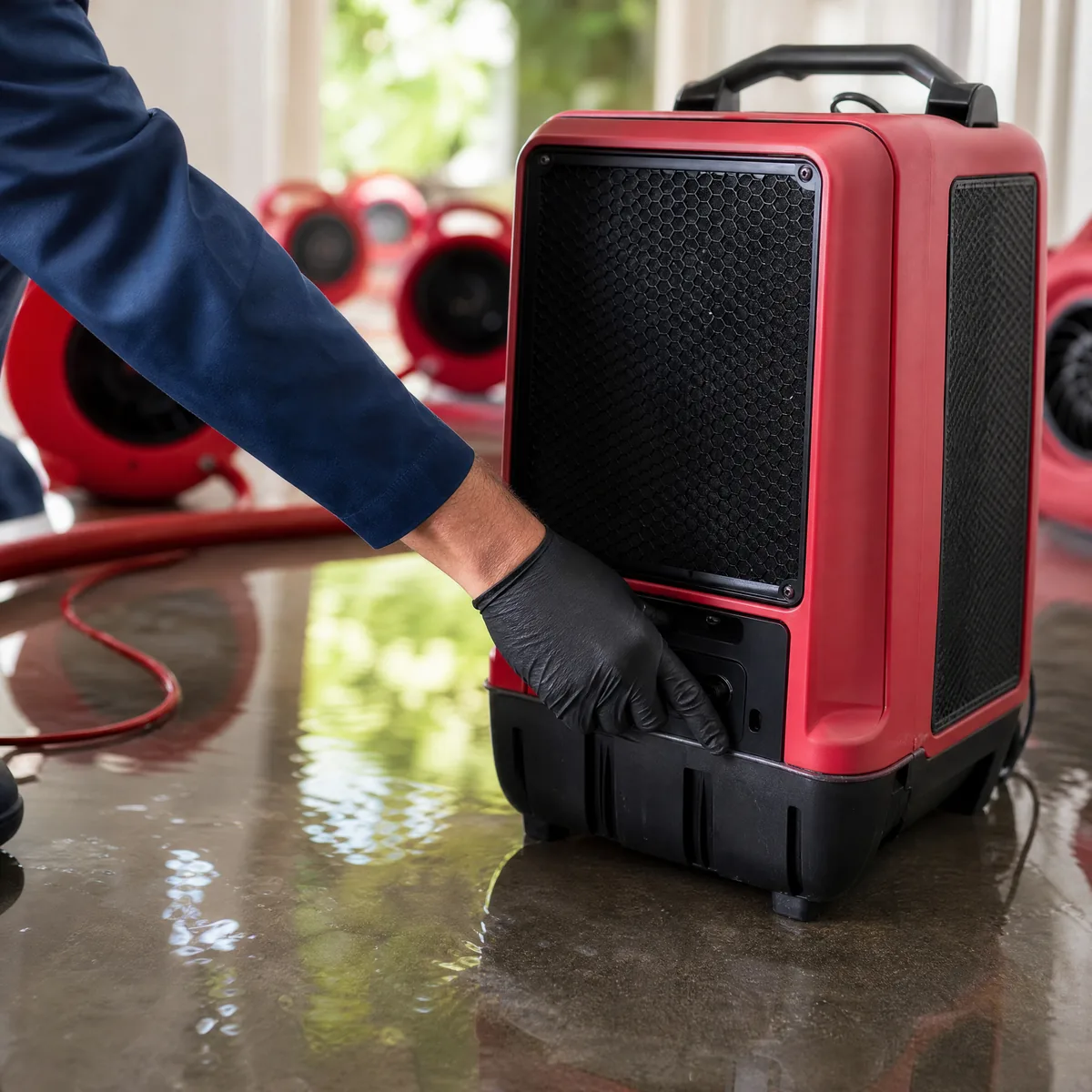
Ask how progress will be measured and what would cause the plan to change. If removal is necessary, request the reason and identify who repairs the opening or replaces the component. Structural drying explains the difference between equipment operation and a complete assessment of the remaining materials.
Plan around an occupied kitchen or laundry room
Losing normal use of these rooms affects daily routines. Discuss safe access, equipment placement, noise, and the anticipated sequence between source repair, drying, and reinstalling the appliance. If a room cannot be used fully, the provider should explain which stage is responsible for the restriction.
In a Fremont apartment or condo, notify management when adjoining units or common areas may be affected. Provide the unit number, floor, and authorized contact. A leak within one cabinet can still need broader coordination if water reaches a shared ceiling or floor assembly.
Keep the appliance and property records together
Save the technician's findings, source-repair invoice, photographs, cleanup scope, and drying records. When hidden damage changes the work, ask for an explanation. Those records help establish which materials were affected and which tasks remain for the repair contractor.
Call (866) 552-5141 for appliance leak cleanup help in Fremont. If the appliance involved is a water heater, review water-heater leak cleanup. If standing water remains, describe the need for water extraction during the call and confirm provider availability.